Industrial refrigeration
ChillerGuard, a Chiller Monitor That Serves Its Own Web App
An embedded monitoring and control unit for Drake Refrigeration's industrial chillers, with its own built-in web application for live status, setup, email alarms, a month of logged data, and remote firmware updates.
The problem
Drake Refrigeration wanted to keep watch over its industrial chillers wherever they were installed. That meant a small, standalone unit that could talk to each chiller’s own controller, show its condition to anyone with a web browser, warn people when something went wrong, and keep a record, all without a PC on site.
This was our second project with Drake, after the end-of-line test stand for their chillers.
What we built
A web application that lives inside the hardware. ChillerGuard runs on a compact embedded controller with a built-in web server. We wrote the firmware in C and the web application it serves in HTML and JavaScript, so a technician just opens a browser and connects.
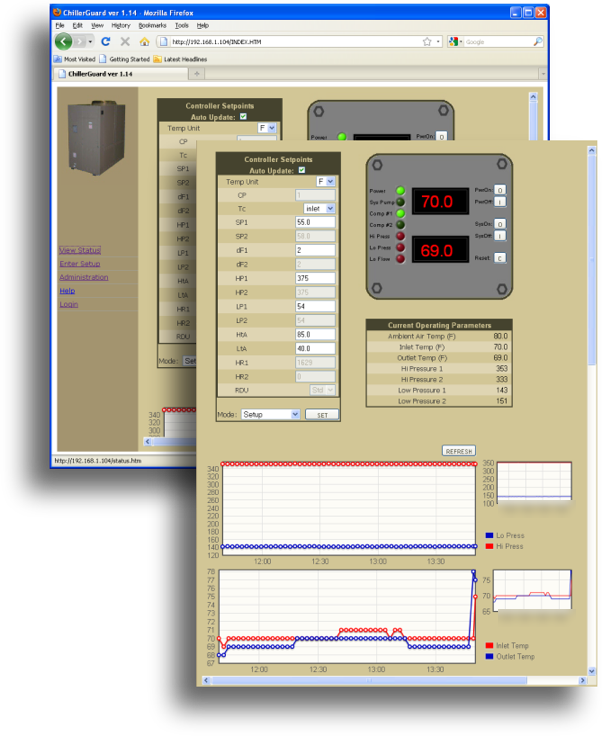
Live, without refreshing. Pressures, temperatures, and calculated values stream to the browser in real time, as large readouts, indicator lights, and trend charts that users can adjust right on the page, all served by the controller itself using AJAX and JavaScript plotting.
Talking to the chiller. The unit speaks the chiller controller’s own protocol over an RS-485 link, reading its values, changing its setpoints, and even sending it firmware updates.
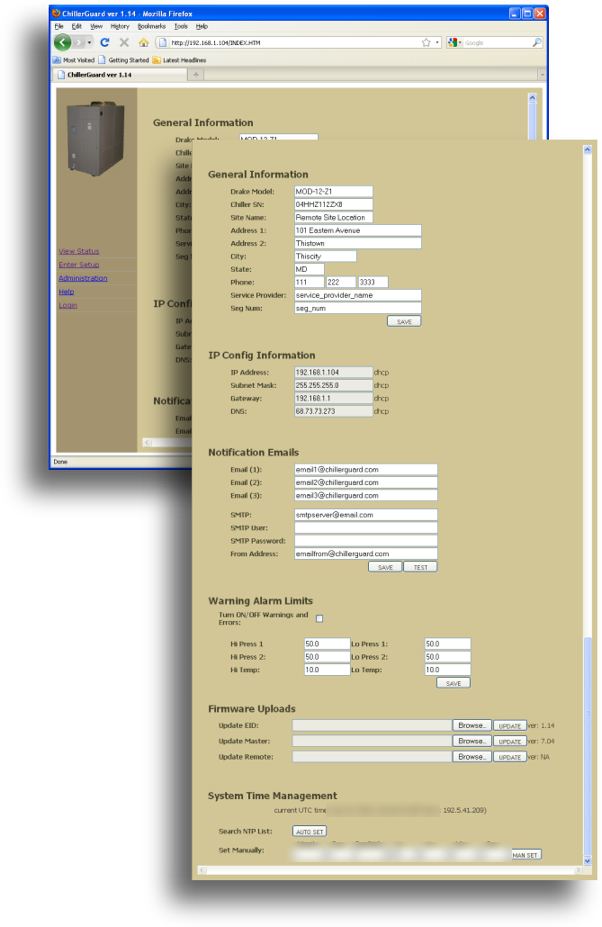
Alarms that reach people. Each site sets its own alarm limits and notification addresses, and the unit emails alerts the moment a limit is crossed.
A month of history. More than 20 values are recorded every few seconds to an SD card, at a configurable rate, and can be downloaded remotely for analysis.
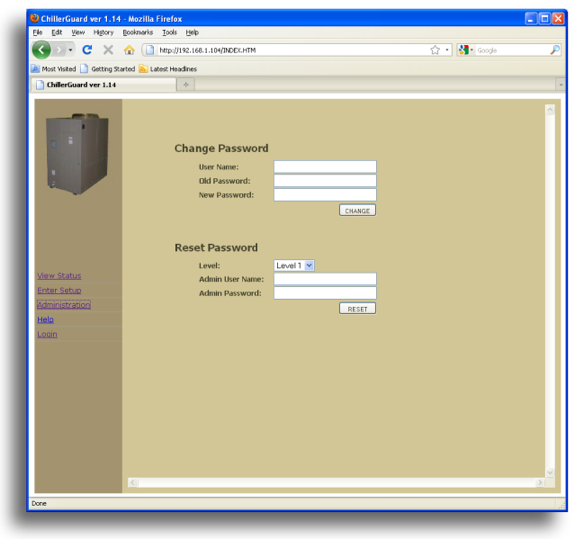
Three levels of access. View-only, limited control, and full administration, each behind its own login.
Set once, keep forever. Site details, alarm limits, email settings, and the chiller’s model and location are stored in permanent memory, so power cycles change nothing. The unit sets its own clock from an internet time server at startup.
The result
Drake got a monitoring product of its own, ChillerGuard, that turns any installed chiller into one that can be checked, adjusted, and updated from a browser, and that calls for help when it needs it.
- Embedded C
- NetBurner embedded controller
- RS-485
- HTML and JavaScript
- AJAX
- FTP
- SMTP
- NTP